
- Головна/
- Publications/
- Three Sanitary Fellings in Zakarpattia Region: Coincidence or Pattern?
Three Sanitary Fellings in Zakarpattia Region: Coincidence or Pattern?

As we have previously noted, sanitary fellings are an important forestry management tool necessary to protect forest stands from the spread of pests and diseases. They are also designated in cases where stands have been damaged by fires, natural disasters, or accidents, and can no longer be restored.
However, in practice, in the hands of unscrupulous forest users, clear sanitary fellings may turn into a tool for harvesting valuable timber. The root of the problem lies in unjustified substantiation of clear sanitary fellings and deliberate falsification of the reasons for logging.
To designate a clear sanitary felling, a forest user must prepare an extensive package of documentation, including pest and disease monitoring materials, forest pathology survey reports, and related records. The procedure also requires approval from forest protection enterprises and authorities of the State Forest Resources Agency. In addition, mandatory disclosure of documents on official websites is required.
Thus, there are multiple procedural safeguards intended to prevent corruption. Nevertheless, independent experts continue to identify stumps of completely healthy trees in areas designated for clear sanitary fellings.
As an example, we present a recent series of three sanitary fellings inspected by experts of ForestCom:
-
one clear sanitary felling in Lazeshchyna Forestry of the Rakhiv Super-Forestry;
-
one clear sanitary felling in Kobyletsko-Polianske Forestry of the Velykyi Bychkiv Super-Forestry;
-
one selective sanitary felling in Kvasy Forestry of the Rakhiv Super-Forestry.
Notably, all three sites are located in Zakarpattia region. In 2024, sanitary fellings accounted for two-thirds (67.5%) of the total annual timber harvest in the region. While clear sanitary fellings cover a relatively small area (4.5%), they account for approximately 30% of the harvested timber volume.
Common Characteristics of the Inspected Sites
The three sites share many similarities. Although only the Lazeshchyna and Kobyletsko-Polianske forestries were officially designated for clear sanitary fellings, the selective felling in Kvasy Forestry is being conducted with excessive intensity.
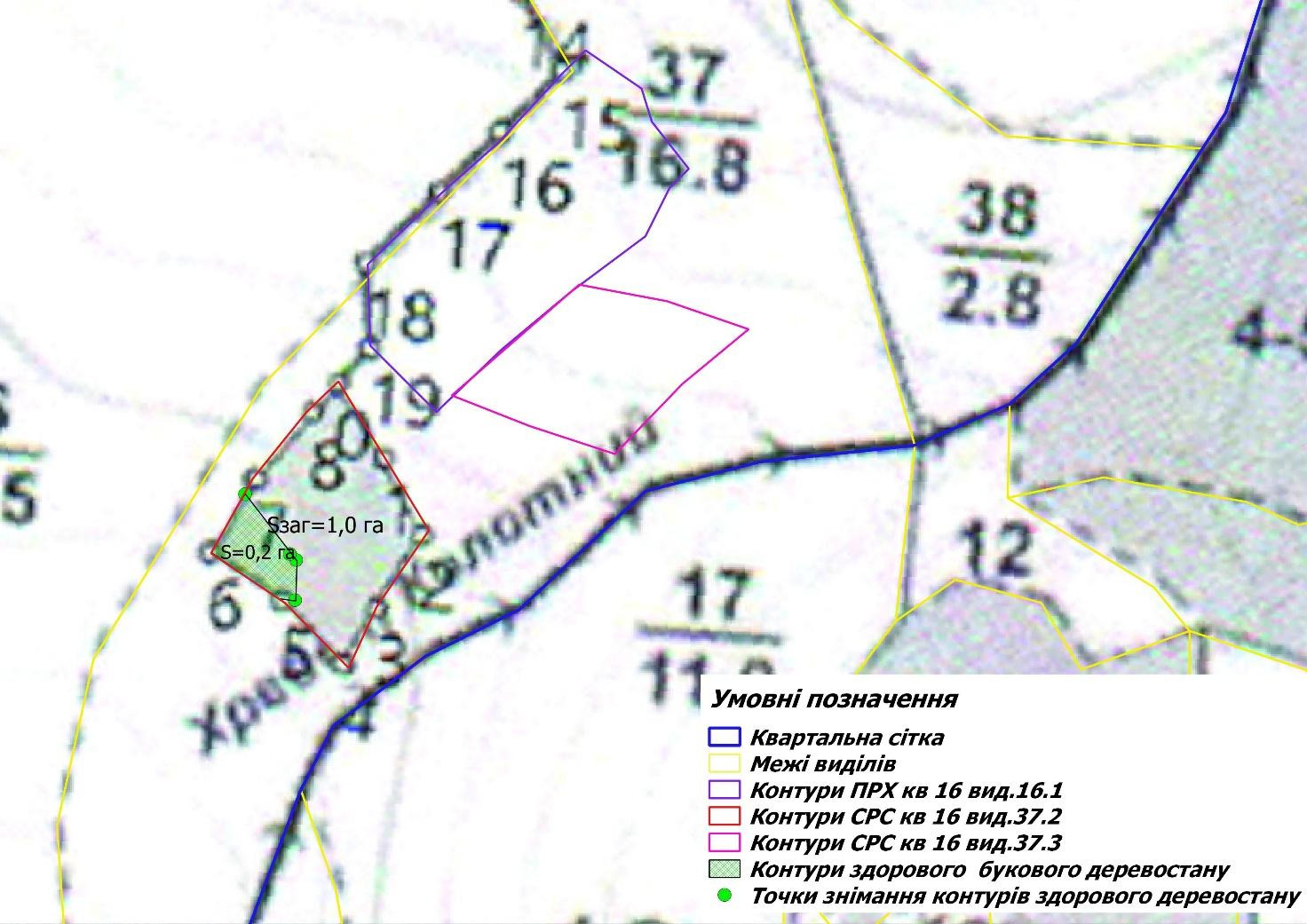
In Kobyletsko-Polianske Forestry (compartment 16, subcompartment 37.2), in our assessment, 0.2 hectares were unjustifiably designated for clear sanitary felling within a total cutting area of 1.0 hectare — that is 20% of the total area. Importantly, according to our evaluation, this portion consists of a healthy beech stand, whereas the remaining area comprises spruce stands.
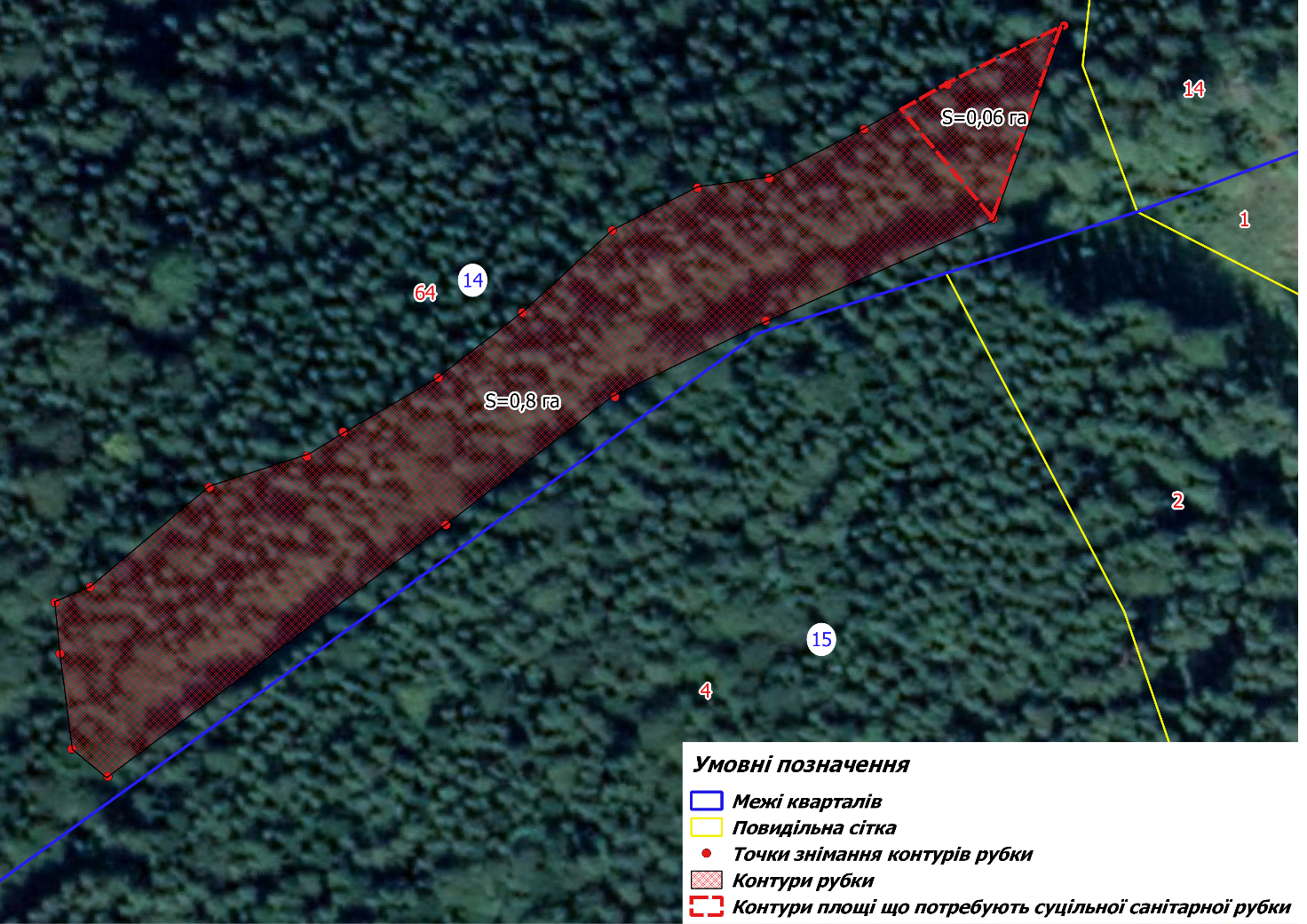
In Lazeshchyna Forestry (compartment 14, subcompartment 64), the implementation of a 1.0-hectare clear sanitary felling raises reasonable doubts regarding its necessity. Based on visual assessment of the physiological condition of stumps, trunks, and crowns of felled trees, experts conclude that the stand did not require clear sanitary felling. The physiological condition of adjacent forest stands shows no signs of pest or disease damage. The area was designated for clear felling based on a natural patch of dead trees covering only 0.06 hectares.
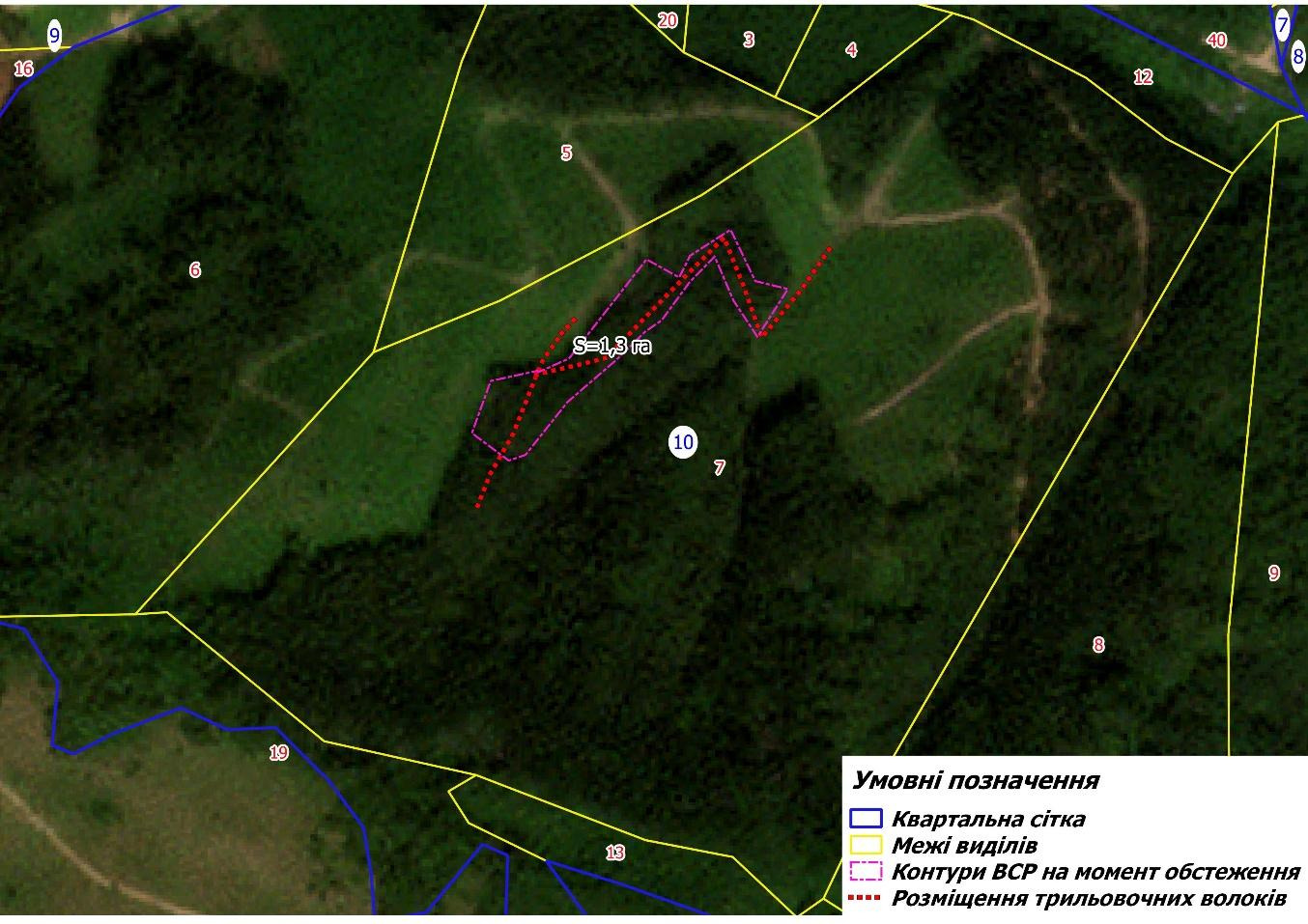
In Kvasy Forestry (compartment 10, subcompartment 7, plot 1), the felling appears justified, as the physiological condition of the stumps indicates the presence of diseased and dead trees. However, at the time of inspection, logging activities were concentrated on a relatively small area of 1.3 hectares, whereas the logging permit specifies an area of 10 hectares. As a result, there has been intensive thinning within a limited area, in some places reducing stand density to below 0.1. According to the logging permit, the felling falls under the system of forest formation and improvement fellings (RFIF). In practice, however, it has resulted in a sparse and structurally disrupted stand.
Indicators of Abuse
All three sites display signs of potential abuse: the assigned tree condition categories appear understated, and the majority of trees in the designated areas are healthy or only slightly weakened. At the same time, the information requires further clarification, and LIiS experts continue communication with forest users and responsible forest protection institutions.
How Are Permits Obtained?
How do forest users obtain authorization for such fellings?
The primary mechanisms of abuse in clear sanitary fellings include non-transparent documentation, corrupt connections, and the absence of effective oversight. The most common violation schemes include:
-
Document falsification: foresters or forest pathologists deliberately downgrade tree condition categories (for example, classifying healthy forest as diseased or deadwood) to legally justify clear felling.
-
“Special surveys”: forest users commission inspections of problematic areas from loyal forest protection entities.
-
Concealment of healthy timber: logging in areas where the majority of trees are healthy or only slightly weakened, contrary to forestry regulations.
-
Area manipulation: improper marking of sites and unclear information on boundary posts, complicating verification of the actual cutting area.
-
Project fragmentation: dividing large areas into smaller plots to avoid mandatory Environmental Impact Assessment (EIA) procedures.
Motivation and Consequences
The motivation behind clear sanitary fellings is straightforward: generating revenue from the sale of commercial timber. Despite certain efforts to increase transparency — such as introducing commission-based inspections involving the public — the substantive justification of clear sanitary fellings often remains confined within a single ведомство and becomes a mere formality.
As a result, a legitimate forestry management tool turns into a коррупційна схема, causing environmental damage, soil erosion, disruption of hydrological regimes, and degradation of forest ecosystems.
The Role of the Public
What leverage does the public have to counter abuse of clear sanitary fellings?
As always, vigilant oversight of forest users’ activities is key — monitoring planned logging operations through public sources and proactively participating in inspection commissions.
If suspicious logging is identified, we encourage reporting it to ForestCom. Such information can significantly accelerate the exposure of unjustified sanitary fellings.
The publication is produced by NGO «ForestCom» with the support of the Askold and Dir Fund as a part of the Strong Civil Society of Ukraine – a Driver towards Reforms and Democracy project, implemented by ISAR Ednannia, funded by Norway and Sweden. The contents of this publication are the sole responsibility of NGO «ForestCom» and can in no way be taken to reflect the views of the Government of Norway, the Government of Sweden and ISAR Ednannia.